
Men in the vans, women on the streets: gender, nation, and resistance against forced mobilization in Ukraine and ex-Yugoslavia
"Busification," Ukraine's word of the year for 2024, describes the mass forced mobilization (word of the year 2023) of Ukrainian men that involves stuffing them into unmarked minibuses and often becomes more violent thereafter. It has met with widespread resistance from ordinary bystanders—virtually always women—and online communities, but has drawn nowhere near as much attention from international supporters of Ukraine. We will explore the gender aspects of this grassroots resistance and how it contrasts with the pro-war and pro-mobilization agendas of Ukrainian "femo-nationalist" groups as well as with the international Women, Peace & Security agenda that is largely relegated to UN conferences. We will also discuss how busification runs up against wartime nation-building discourse, which views such state violence as representative of a Soviet and/or Russian mentality and therefore un-Ukrainian. We will additionally add a comparative perspective from the Yugoslav wars in the 1990s, where forced mobilization was equally widespread, especially affecting vulnerable groups of refugee men, and as a phenomenon was largely ignored by international humanitarian organizations. Does Ukraine's widespread resistance against busification and the even wider support for the resisters constitute genuine civil society? Or does it not count if it is spontaneous, atomized, and does not pursue greater political objectives?
Speakers
Marta Havryshko | Clark University, US
Milica Popović | Austrian Academy of Sciences
Almut Rochowanski | Quincy Institute
Tarik Cyril Amar | Koç University, Turkey
Moderator
Volodymyr Ishchenko | Freie Universität Berlin
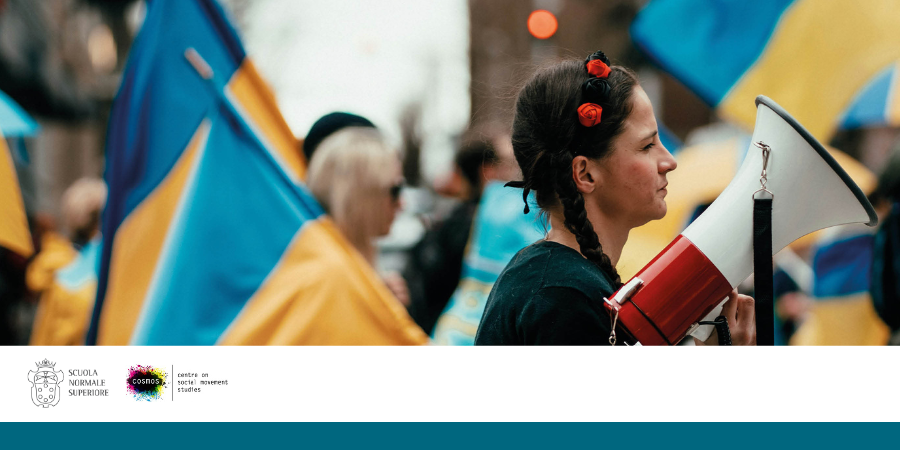
Photo by Remy Gieling on Unsplash