
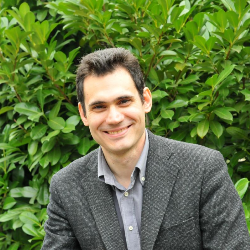
Gabriele Pedullà
Full Professor
Letteratura italiana (SSD: ITAL-01/A)
Gabriele Pedullà was born in Rome in 1972; before joining the Scuola Normale Superiore in 2025, he taught at the universities of Teramo (2002-09) and Roma Tre (2009-2025). In addition, he has been visiting professor at Stanford, UCLA, Princeton, Berkeley, and the École Normale Supérieure of Lyon; he has received fellowships from the Villa I Tatti, the Harvard centre of Italian Renaissance studies at Florence, and from the Italian Academy of Columbia University, and has been a member of the Institute for Advanced Studies at Princeton. He works principally on Renaissance political and ethical treatises and historiography and on nineteenth- and twentieth-century fiction, with special attention to the intersections between literature and politics. He has a special passion for Korean cinema and Polish literature; more than thirty-five years after the first reading, however, his single favorite book remains Ludovico Ariosto’s Orlando furioso.
Pedullà has published four monographs: La strada più lunga. Sulle tracce di Beppe Fenoglio (Donzelli, 2001: Moretti Prize); In piena luce. I nuovi spettatori e il sistema delle arti (Bompiani, 2008; revised and enlarged English edition: In Broad Daylight: Movies and Spectators after the Cinema, Verso 2012); Machiavelli in tumulto. Conquista, cittadinanza e conflitto nei «Discorsi sopra la prima deca di Tito Livio» (Bulzoni, 2011; revised and enlarged English edition: Machiavelli in Tumult: The «Discourses on Livy» and the Origins of Political Conflictualism, Cambridge University Press, 2018); and On Niccolò Machiavelli: The Bonds of Politics (Columbia University Press, 2023, forthcoming in Italian for Einaudi in September 2026). Together with Nadia Urbinati he has written Democrazia afascista (Feltrinelli, 2024). In the next few years he is planning to focus his research on Baldassarre Castiglione and nineteenth- and twentieth-century Sicilian political novels (approximately from Federico De Roberto to Giuseppe Tomasi di Lampedusa).
Together with Sergio Luzzatto, he conceived and directed the Atlante della letteratura italiana in three volumes (Einaudi, 2010-2012), for which he also wrote around twenty essays. He is the general editor of the new commented editions of Cesare Pavese’s works in seven volumes for Garzanti (2021-). Over the years, he has also edited some anthologies of short texts: Racconti della Resistenza (Einaudi, 2005; new enlarged edition: Einaudi, 2024); Parole al potere. Discorsi politici italiani: 1861-1994 (BUR, 2011 and 2018); Racconti del Risorgimento (Garzanti, 2021); and, more recently, Racconti della Resistenza europea (Einaudi, 2025). These four volumes can be seen as the pieces of a single project (still ongoing) on intellectuals and politics in nineteenth- and twentieth-century Europe.
Pedullà has edited various Italian and non-Italian classics. Besides Niccolò Machiavelli’s The Prince (Donzelli, 2013; new enlarged edition: Donzelli, 2022; forthcoming in English for Verso in 2027), at least the following should be mentioned: Carlo Dossi, Opere (Istituto Poligrafico dello Stato, 1999); Dionigi di Alicarnasso, Le antichità romane (with Francesco Donadi: Einaudi, 2010); Luigi Pirandello, Racconti fantastici (Einaudi, 2011); Ludovico Ariosto, Opere (Istituto Poligrafico dello Stato, 2011); Karl Marx, Scorpione e Felice (Editori Internazionali Riuniti, 2011); Beppe Fenoglio, Il libro di Johnny (Einaudi, 2015); Federico De Roberto, La paura e altri racconti (Garzanti, 2015); Federico De Roberto, L’Imperio (Garzanti, 2019); Cesare Pavese, Prima che il gallo canti (Garzanti, 2021); Giuseppe Berto, Il brigante (Neri Pozza, 2022); Beppe Fenoglio, La malora (Einaudi, 2022); Philippe de Commynes, Memorie d’Italia (Einaudi, 2025). All these volumes are enriched with long introductions. Pedullà has also edited works by such authors as Walter Benjamin, Felix Gilbert, Johan Huizinga, Nicole Loraux, Fredric Jameson, and Paul Schrader.
He is a freelance consultant of the publisher Einaudi and the editor of the series «Viella Letteratura» for Viella. After writing for some years for «Alias», since 2009 his reviews and literary essays have appeared in the Sunday cultural supplement of «Il Sole 24 Ore», and, more recently, also in «Domani» and «L’Espresso»; more occasionally, he contributes to the on-line journals «leparolelecose» and «doppiozero»; his writings have been published in English in the «New Left Review» and «Jacobin», and in French in «Période». From 2010 to 2020 he served on the jury of the Viareggio Prize and since 2017 he has been member of the Steering Committee of the Strega Prize. He was historical consultant for the Netflix series The Leopard (2025), a free interpretation of the novel by Giuseppe Tomasi di Lampedusa; currently, he is curating an exhibition on Bernardo Bertolucci’s Novecento for the fiftieth anniversary of the film’s release (Parma, Palazzo del Governatore, March-July 2026). He invented and directed the first edition of the Festa della Resistenza of the Municipality of Rome (2023) and of the Fondazione Feltrinelli of Milan (2025).
Gabriele Pedullà is also the author of four books of fiction: the short-story collections Lo spagnolo senza sforzo (Einaudi, 2009: partially translated into English: Mondello Prize for Debut Fiction; Verga Prize; Frontino Prize; Cutro Prize), and Biscotti della fortuna (Einaudi, 2020: Flaiano SuperPrize); the novel Lame (Einaudi, 2017: Carlo Levi Prize; Martoglio Prize – due to be published in English for Seagull Books as Blades); and the triptych Certe sere Pablo (Einaudi, 2024: Certe sere Pablo: Alvaro-Bigiaretti Prize). His short stories are published in «Finzioni».
His works have been translated, or are under translation, in nine languages.
Pedullà’s family name rhymes with hurrah, mullah, and Bogotá.